Chapter 14
She also had to correct several public statements.
For the first time in her adult life, she had to take responsibility without asking our parents to solve the problem.
I hoped she would learn from it.
But I didn't make her recovery my responsibility.
PART 17
The final hearing concerning the trust took place almost a year after Grandpa's death.
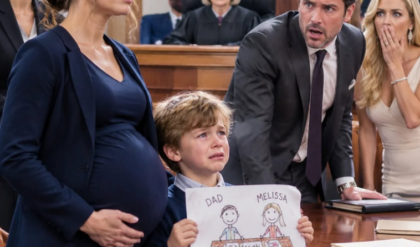
The courtroom was quieter than the first one.
There were no livestreams.
No reporters crowded the doorway.
No dramatic speeches.
The judge reviewed the final accounting and confirmed that the trust had been administered according to its governing documents.
The unauthorized transactions had been addressed through recovery proceedings, negotiated settlements, and separate legal action.
The trustee was discharged from temporary emergency oversight and returned to the normal administration process.
My status as sole beneficiary was confirmed.
The five-million-dollar trust remained protected.
The judge also approved the establishment of the Walter Ashford Independence Fund.
I sat beside Olivia and listened.
When the hearing ended, the judge looked toward me.
“Ms. Ashford, your grandfather's documents demonstrate considerable foresight. I hope the estate will be administered in a way that honors his intentions.”
I stood.
“It will, Your Honor.”
Outside, Daniel was waiting.
He shook my hand.
“It's over.”
I looked toward the courthouse steps.
“The legal part.”
He smiled.
“That's usually the longest part.”
I laughed.
Then I noticed something across the street.
My father.
He was standing beside a dark sedan.
He looked directly at me.
For a moment, neither of us moved.
Then he walked toward us.
“Eleanor.”
Olivia stepped closer.
I raised my hand slightly.
“It's okay.”
My father stopped a few feet away.
He looked older than I remembered.
The confident businessman who had once entered every room expecting respect was gone.
His shoulders were slumped.
His expression was uncertain.
“I wanted to congratulate you,” he said.
I stared at him.
“For what?”
“The trust.”
I almost smiled.
“It's not a lottery prize, Dad.”
“I know.”
He glanced at Daniel.
Then back at me.
“I wanted to ask whether we could start over.
”I waited.
He continued.
“The business is gone. Your mother and I are struggling. Fiona is barely speaking to us. I know things have been difficult.”
I looked at him.
“Difficult?”
He lowered his eyes.
“I know.”
“No, Dad. You know the consequences. You still haven't acknowledged what you did.”
He looked at me.
“I was trying to save everything.”
“You tried to save your company with money that didn't belong to you.”
“I thought I could replace it.”
“You signed a statement accusing me of stealing money you had already taken.
”He said nothing.
“You helped bring police officers into my bedroom.”
His eyes became wet.
“I never wanted you hurt.”
I looked at him for a long time.
“Then why didn't you stop it?”
He had no answer.
Finally, he whispered:
“I'm sorry.”
I believed that he was sorry.
But I also knew that being sorry and being trustworthy were not the same thing.
“I hope you take responsibility for what happened,” I said.
He nodded.
“But I can't rebuild a relationship on promises. Not after everything.”
He looked at the courthouse.
“Will you ever let us be part of your life again?”
I considered the question.
“I don't know.”
Then I walked away.
PART 18
The following spring, the Walter Ashford Independence Fund opened its first office.
It occupied a modest suite in a renovated building downtown.
There were three consultation rooms, a small conference space, and a reception area with shelves of financial education materials.
Nothing was extravagant.
I wanted the office to feel welcoming.
Not intimidating.
The first person we helped was a young woman named Sarah.
She was twenty-six and had inherited money from her grandmother.
Her uncle had convinced her to sign documents giving him temporary access to the account.
The temporary arrangement had continued for almost two years.
She arrived at our office carrying a folder full of statements.
Her hands were trembling.
“I'm sorry,” she said. “I don't know if this is important enough.”
I smiled.
“That's what we're here to find out.”
She sat down.
For the next hour, our legal adviser reviewed the records.
There were inconsistencies.
Missing statements.
Transfers that required explanation.
A power of attorney that appeared broader than Sarah had understood when she signed it.
We didn't promise an outcome.
We didn't tell her that her uncle was guilty.
We simply helped her understand her rights and identify the next legal steps.
When she left, she looked different.
Not happy.
Not yet.
But less frightened.
At the door, she turned around.
“Thank you for believing me.”
I shook my head.
“We haven't established everything yet.”
She nodded.
“I know. But you listened.”
I watched her walk down the hallway.
Then I returned to my office.